
-
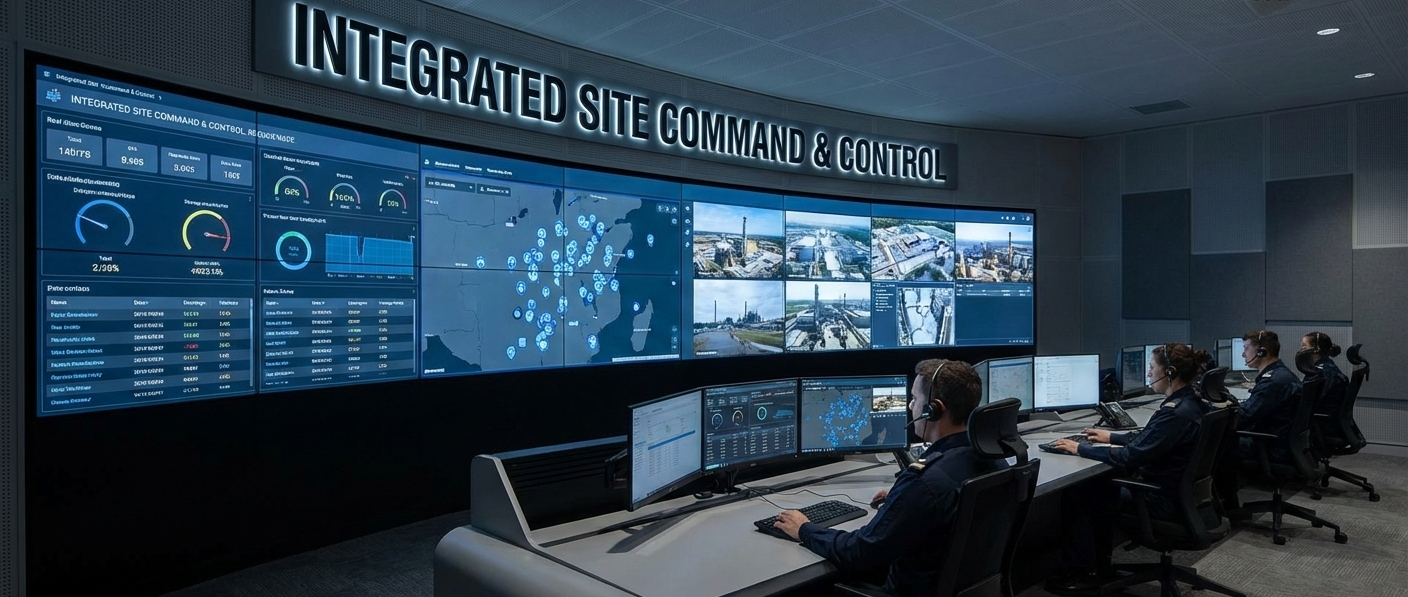
Integrated Site Command and Control for Construction and Early Operations
Integrated site command and control brings together access, traffic & delivery management, surveillance, system monitoring, and incident response into one centralized capability designed to manage construction risk and scale seamlessly into operations.
Need help with setting up your control room?
Contact me for support...
Content
- Purpose and Operational Context
- From Construction Control to Early Operations
- Governance, Command, and Coordination
- Site Zoning and Risk-Based Operations
- Integrated Systems and Data Architecture
- Incident and Emergency Management
- Control Room Operations and Staffing
- Transition into Early Operations
- Outcome and Value
Purpose and Operational Context
Integrated site command and control provides the centralized operational capability required to manage security, safety, and incident coordination during large-scale projects while establishing a solid foundation for early operations. In environments characterized by changing access points, fluctuating workforce numbers, and multiple concurrent incident types, centralized situational awareness and structured decision-making are critical.
By consolidating people, process, and technology into a single operational function, integrated site command and control ensures that activities remain secure, compliant, and resilient while preparing the organization for operational readiness.
From Construction Control to Early Operations
During construction, integrated site command and control acts as the primary coordination hub for day-to-day site activities. It provides continuous visibility across residential buildings, commercial assets, malls, parks, roads, and supporting infrastructure, while adapting to progressing layouts and evolving construction risks.
As the project progresses toward early operations, the same command and control capability supports training, procedural refinement, and gradual onboarding of operational stakeholders. This approach avoids disruptive handovers and enables a controlled, low-risk transition from construction into operations.
Governance, Command, and Coordination
Effective integrated site command and control is built on clear governance. Roles, responsibilities, and escalation paths are defined to ensure consistent decision-making under both routine and emergency conditions. Operators, supervisors, and incident coordinators function within a structured command framework that supports rapid assessment, response, and accountability.
Coordination with external authorities, including civil defense, police, and medical services, is based on predefined communication and escalation protocols. This model emphasizes structured coordination and information exchange rather than live system integration, ensuring clarity, compliance, and reliability during incidents.
Site Zoning and Risk-Based Operations
The physical site is translated into a digital operational model within the command and control environment. Residential areas, commercial buildings, malls, public spaces, road networks, and critical infrastructure are zoned and linked to relevant security and safety systems.
Temporary construction elements, such as contractor access points, logistics routes, and high-risk vehicle-pedestrian interfaces, are continuously reflected in the operational picture. This risk-based approach enables integrated site command and control to respond dynamically to construction conditions while supporting long-term operational zoning.
Integrated Systems and Data Architecture
Integrated site command and control consolidates all relevant systems into a single operational interface. Access control using mixed credential types operates alongside video surveillance, intrusion detection, fire and life-safety systems, environmental monitoring, and technical alarms for utilities and IT infrastructure.
Events from these systems are correlated and prioritized to reduce alarm fatigue and present operators with actionable intelligence rather than isolated alerts. The platform is deployed within a private, nationally hosted cloud environment, supporting regulatory compliance and defined data governance requirements, including long-term retention for operational data and controlled retention for CCTV footage.
Incident and Emergency Management
Incident and emergency management is the core function of integrated site command and control. All incidents, including fire, medical, traffic, security, environmental, technical, safety, planned events, disasters, and system alarms, follow standardized and repeatable workflows.
Each incident progresses through detection, verification, classification, response, coordination, and formal closure. Automated system actions support operators by presenting relevant information, activating predefined responses, and guiding decision-making during high-pressure situations. Coordination with authorities follows established protocols to ensure timely and accurate information exchange.
Control Room Operations and Staffing
The command and control environment is designed as a centralized operational space with dedicated operator workstations, supervisory oversight, and shared situational awareness displays. Staffing levels are aligned with construction activity and adjusted progressively as the project transitions into early operations.
Training is delivered in phases, focusing on system proficiency, incident assessment, decision-making, and authority coordination. This ensures operational competence and confidence well before the site becomes fully operational.
Transition into Permanent Operations
The transition into early operations is managed as a controlled evolution rather than a single milestone. Residents, tenants, and public-facing functions are onboarded gradually, while access rules, incident workflows, and coordination procedures are refined.
Exercises and drills validate readiness and reinforce coordination with internal teams and external stakeholders. Performance indicators such as detection time, response effectiveness, resolution speed, and false alarm reduction drive continuous improvement and operational maturity.
Outcome and Value
Integrated site command and control delivers centralized visibility, structured incident coordination, and regulatory compliance throughout construction and into early operations. More importantly, it establishes a durable operational capability that transforms the control room from a monitoring function into a true command, coordination, and decision-making center—capable of supporting complex developments across their entire lifecycle.
text
text
Let’s Talk
If you want to strengthen operational control, improve situational awareness, or prepare for complex operational
challenges, I welcome a confidential discussion.
Keep reading...

Control Room Projects | Operational Command & Public Safety Systems
Portfolio of control room projects highlighting command and control leadership, public safety systems, and complex operational environments.

Control Room Maturity Roadmap: A Reading Guide for Security Operations Excellence
A practical control room maturity roadmap, guiding security operations teams from basic monitoring to integrated command & control excellence.
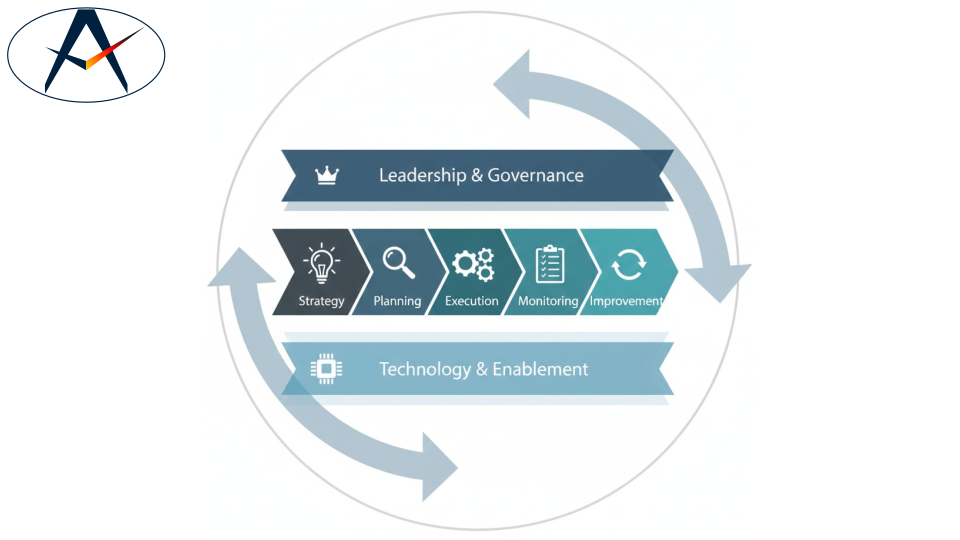
Concept of Operations for Hospitality Facilities: A Structured Framework for Safe, Seamless, and Resilient Operations
A structured Concept of Operations for hospitality security, integrating safety, guest services, and emergency response into daily hotel operations.
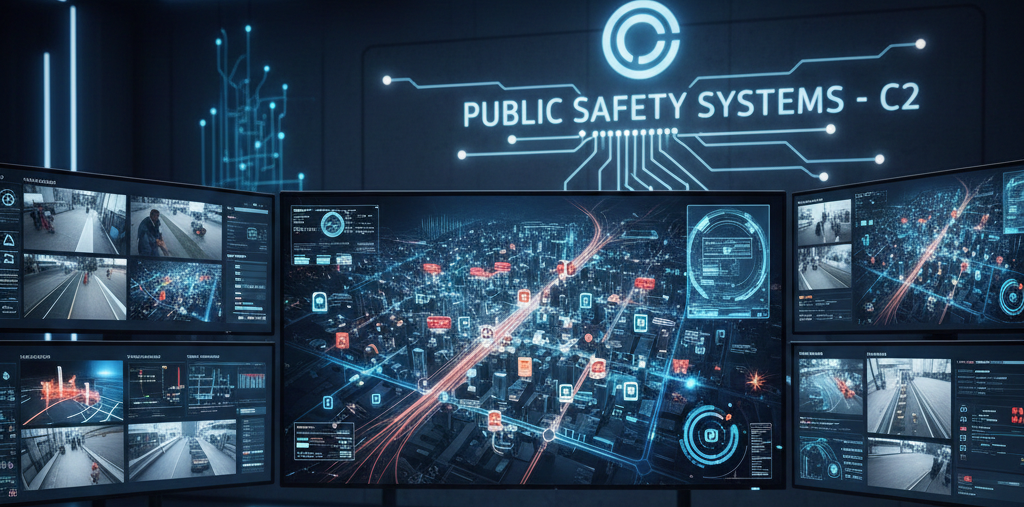
Command and Control (C2) & Public Safety Systems: Core Functions and Enabling Technologies
Command and Control (C2) and Public Safety Systems enable real-time monitoring, dispatch, decision support, and multi-agency coordination for incidents, emergencies, and major events.