
Introduction
Security operations rarely fail in dramatic ways. They fail quietly — through confusion, hesitation, unclear ownership, and technology that looks impressive but does not support real decisions.
When I step into a new security operations role — whether permanent or advisory — my objective is not to introduce tools, restructure teams, or launch new systems. My objective is far simpler and far harder: to make security operations predictable, calm, and trusted.
This article explains my security operations approach across hospitality, community environments, construction projects, and malls — and why PSIM only comes after operational clarity is achieved.
Why Security Operations Break Down Without Anyone Noticing
Most organizations believe they have a security problem when they actually have an operational clarity problem.
Common symptoms include:
- Incidents handled differently depending on who is on duty
- Escalations based on personalities rather than criteria
- Technology producing data, not decisions
- Operators reacting instead of coordinating
- Management surprised by incidents that “came out of nowhere”
None of this is caused by a lack of effort. It is caused by the absence of a shared operational model.
Before tools, before procedures, before dashboards — security operations need a clear definition of normal.
My First 30–60 Days: Listening Before Changing
I do not arrive with a predefined solution. I arrive with a structured way of observing.
In the first weeks, my focus is on:
- How incidents are actually handled versus how they are described
- Who really makes decisions under pressure
- Where information is lost, delayed, or duplicated
- Which tasks exist only because something else does not work
- How operators compensate for unclear processes
This phase is especially critical in hospitality and community environments, where security must be seamless without being intrusive and effective without being disruptive.
I deliberately avoid early change. Stability comes first. Trust follows.
Defining “Normal Operations” Before Planning for Emergencies
Organizations often jump straight to emergency scenarios. That is a mistake.
If daily operations are unclear, emergency response will fail under stress.
Before discussing crises, I ensure there is alignment on:
- What a “standard incident” looks like
- When an incident needs an escalation
- Who owns decisions at each level
- What information must be available — and to whom
- What closure actually means
This is where operational confidence begins. Once “normal” is defined, escalation becomes logical instead of emotional.
Aligning People, Procedures, and Technology — In That Order
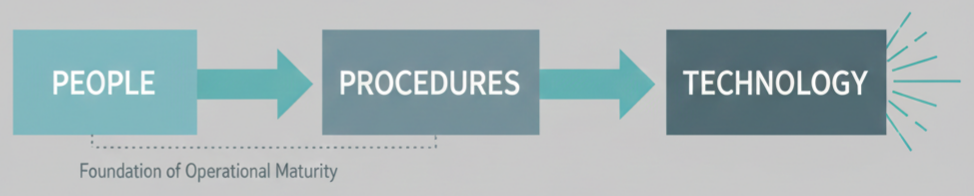
Security operations mature only when alignment follows a clear sequence.
- People Roles, authority, accountability, and decision rights must be explicit.
- Procedures Not documents for compliance, but practical workflows that match reality.
- Technology Only then does technology amplify effectiveness instead of exposing weaknesses.
When organizations reverse this order, technology becomes a spotlight — revealing fragmentation instead of solving it.
This is also the point where conversations about PSIM usually begin — often prematurely.
When PSIM Becomes Relevant — and When It Does Not

PSIM is not a starting point. PSIM is a force multiplier.
I consider an organization ready for PSIM only when:
- Incident categories are clearly defined
- Escalation logic is agreed and consistent
- Operators understand what decisions they are expected to support
- Management knows what information it expects during incidents
- “Common operational picture” has a shared meaning
Without this foundation, PSIM becomes an expensive interface for unresolved questions.
How I Think About PSIM — Without Talking About Software
I do not think about PSIM as software. I think about it as an operational language.
At its best, PSIM:
- Structures how incidents are understood
- Supports decisions instead of replacing them
- Makes escalation transparent
- Preserves operational memory
- Reduces dependency on individuals
The value is not in integrations or dashboards. The value is in consistency under pressure.
One Operational Model, Different Environments
The core approach remains the same, but risk profiles differ.
- Hospitality: discreet control, guest experience, fast coordination
- Community environments: scale, shared responsibility, multi-stakeholder clarity
- Construction: dynamic risk, temporary conditions, constant change
- Malls: density, public interaction, simultaneous low-level incidents
A mature operational model adapts without fragmenting.
Why This Approach Scales — and Survives Leadership Change
Organizations often depend on individuals who “know how things work.” That knowledge disappears when they do.
My approach focuses on:
- Institutional memory instead of personal memory
- Predictable decisions instead of heroic reactions
- Measurable performance instead of anecdotal success
- Systems that support people — not replace them
This is what allows security operations to scale, mature, and remain resilient.
Why Organizations Ask Me to Step In
I am usually called when:
- Security operations feel busy but ineffective
- Technology investments have not delivered confidence
- Leadership wants clarity, not complexity
- Teams need structure without disruption
I do not bring tools first. I bring clarity, structure, and calm execution.
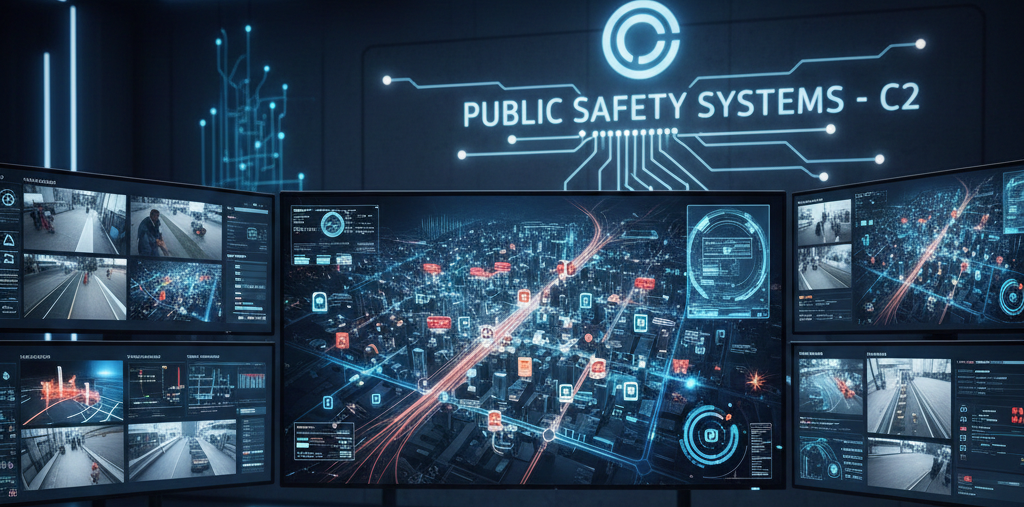
Command and Control (C2) & Public Safety Systems: Core Functions and Enabling Technologies
Command and Control (C2) and Public Safety Systems enable real-time monitoring, dispatch, decision support, and multi-agency coordination for incidents, emergencies, and major events.
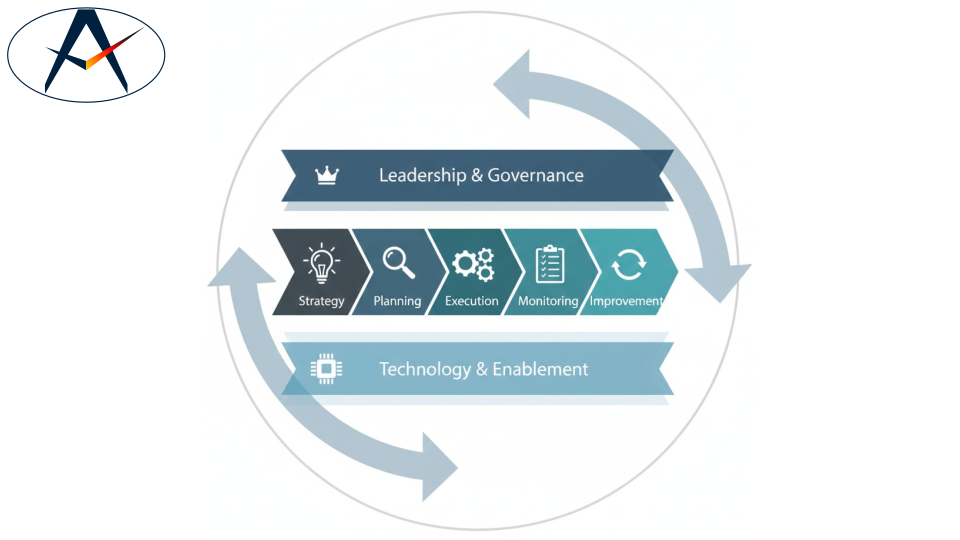
Concept of Operations for Hospitality Facilities: A Structured Framework for Safe, Seamless, and Resilient Operations
A structured Concept of Operations for hospitality security, integrating safety, guest services, and emergency response into daily hotel operations.

Control Room Maturity Roadmap: A Reading Guide for Security Operations Excellence
A practical control room maturity roadmap, guiding security operations teams from basic monitoring to integrated command & control excellence.

Control Room Projects | Operational Command & Public Safety Systems
Portfolio of control room projects highlighting command and control leadership, public safety systems, and complex operational environments.