
Why Control Room Maturity Matters
Many organizations invest heavily in CCTV, PSIM, VMS, and analytics, yet still struggle with slow response, fragmented decision-making, and unclear authority during incidents.
Control room maturity describes how effectively an organization can detect, understand, decide, coordinate, and act under normal operations and crisis conditions.
A mature control room is predictable, auditable, and resilient.
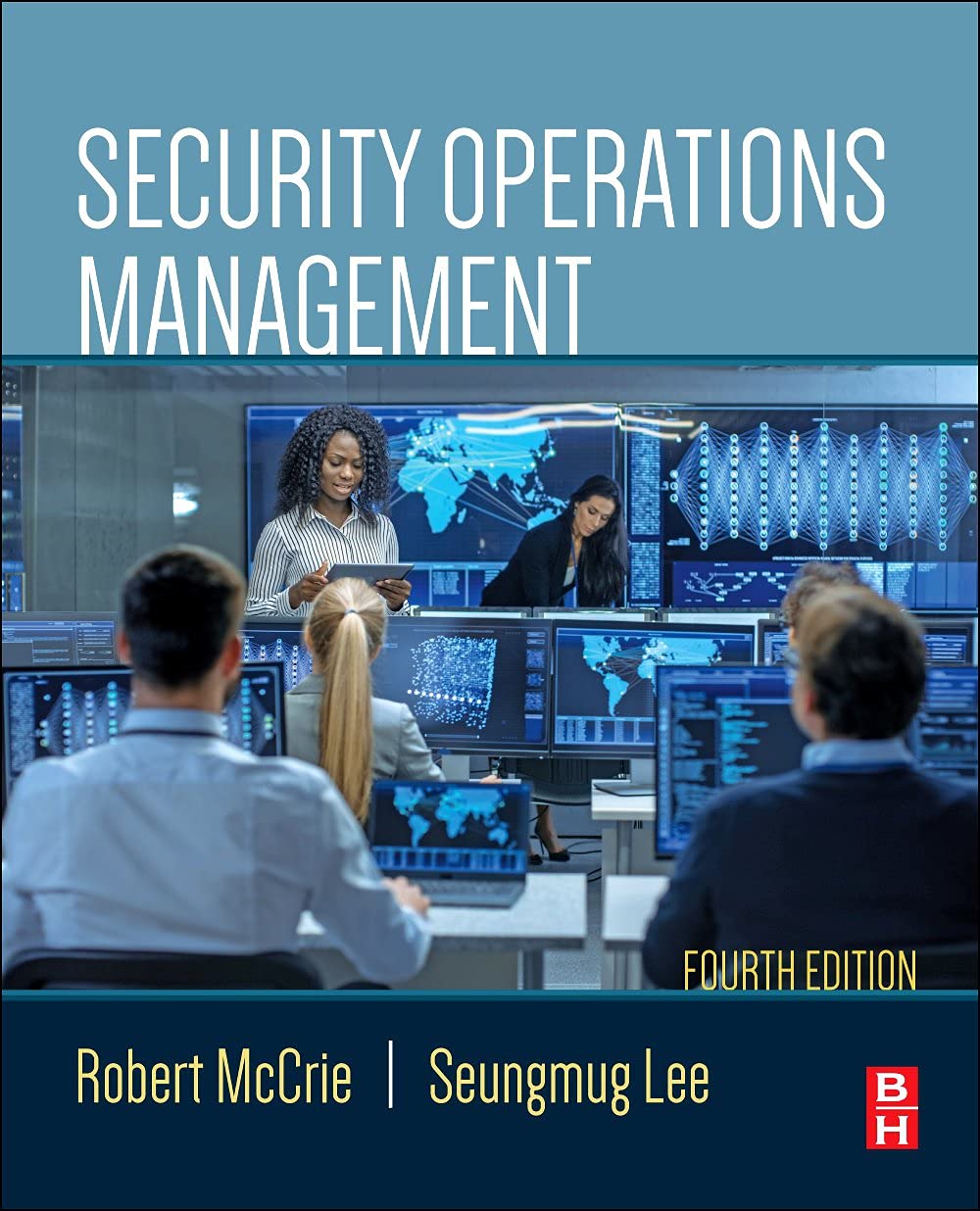
Security Operations Management 4th Edition
Author: Robert McCrie (Author), Seungmug Lee (Author)
Security Operations Management, Fourth Edition, the latest release in this seminal reference on corporate security management operations for today’s security management professionals and students, explores the characteristics of today’s globalized workplaces, security’s key role within them, and what the greatest concern is for security practitioners and senior managers. Incorporating the latest security research and best practices, the book covers key skills needed by security managers to demonstrate the value of their security program, offers information on identifying and managing risk, and reviews the latest technological advances in security control, command, communications and computing.
The Five Levels of Control Room Maturity
Level 1 – Reactive Monitoring
Operations are camera-centric and alarm-driven. Procedures are informal, incident data is inconsistent, and response depends on individual operator experience.
Reading Focus: Basic security operations, alarm handling, CCTV fundamentals.

The Complete Guide to Physical Security 1st Edition
Author: Daniel J. Benny (Author), Paul R. Baker (Author)
To adequately protect an organization, physical security must go beyond the "gates, guns, and guards" mentality that characterizes most security programs. Creating a sound security plan involves understanding not only security requirements but also the dynamics of the marketplace, employee issues, and management goals. The Complete Guide to Physical Security discusses the assets of a facility-people, building, and location-and the various means to protect them. It emphasizes the marriage of technology and physical hardware to help those tasked with protecting these assets to operate successfully in the ever-changing world of security.
Level 2 – Structured Operations
Standard operating procedures emerge. Roles are defined, escalation paths exist, and incidents are logged with basic classification.
Reading Focus: SOP development, shift management, incident reporting discipline.

Security Operations Center: Building, Operating, and Maintaining your SOC 1st Edition
Author: Joseph Muniz (Author), Gary McIntyre (Author), Nadhem AlFardan (Author)
Security Operations Center is the complete guide to building, operating, and managing Security Operations Centers in any environment. Drawing on experience with hundreds of customers ranging from Fortune 500 enterprises to large military organizations, three leading experts thoroughly review each SOC model, including virtual SOCs. You’ll learn how to select the right strategic option for your organization, and then plan and execute the strategy you’ve chosen.
Level 3 – Integrated Command & Control
Systems are integrated through PSIM or equivalent platforms. Operators share a common operational picture, supported by defined workflows and cross-discipline coordination.
Reading Focus: PSIM concepts, multi-agency coordination, incident lifecycle models.
Wiley Pathways Disaster Response and Recovery
Author: David A. McEntire
Providing readers with a well-rounded understanding of disaster responses, this book first explores the various types of disasters that may occur. It then uncovers the myriad of actors that are involved in emergency management as well as the diverse theoretical frameworks from which post-disaster activities may be approached. Readers will gain a better understanding of the typical challenges to be expected during response efforts as well as the tools and techniques that will enhance the ability to protect lives, reduce property damage and minimize disruption.
Level 4 – Risk-Driven & Resilient Operations
Operations are aligned to formal risk assessments, business impact analysis, and resilience planning. Exercises, audits, and performance metrics are routine.
Reading Focus: Risk management, business continuity, emergency management standards.

ISO 22320:2018, Second Edition: Security and resilience - Emergency management - Guidelines for incident management (NON000000)
Author: International Organization for Standardization
This document gives guidelines for incident management, including— principles that communicate the value and explain the purpose of incident management,— basic components of incident management including process and structure, which focus on roles and responsibilities, tasks and management of resources, and— working together through joint direction and cooperation.This document is applicable to any organization involved in responding to incidents of any type and scale.This document is applicable to any organization with one organizational structure as well as for two or more organizations that choose to work together while continuing to use their own organizational structure or to use a combined organizational structure.
Level 5 – Adaptive & Intelligence-Led Control Rooms
Data analytics, predictive insights, and continuous improvement drive decision-making. The control room acts as a strategic nerve center rather than a reactive monitoring hub.
Reading Focus: Decision science, resilience engineering, data-driven operations.
Resilience Engineering in Practice: A Guidebook (Ashgate Studies in Resilience Engineering) 1st Edition
Author: Erik Hollnagel (Author), Jean Paries John Wreathall
Resilience engineering has since 2004 attracted widespread interest from industry as well as academia. Practitioners from various fields, such as aviation and air traffic management, patient safety, off-shore exploration and production, have quickly realised the potential of resilience engineering and have became early adopters. The continued development of resilience engineering has focused on four abilities that are essential for resilience. These are the ability a) to respond to what happens, b) to monitor critical developments, c) to anticipate future threats and opportunities, and d) to learn from past experience - successes as well as failures. Working with the four abilities provides a structured way of analysing problems and issues, as well as of proposing practical solutions (concepts, tools, and methods). This book is divided into four main sections which describe issues relating to each of the four abilities. The chapters in each section emphasise practical ways of engineering resilience and feature case studies and real applications. The text is written to be easily accessible for readers who are more interested in solutions than in research, but will also be of interest to the latter group.