
-
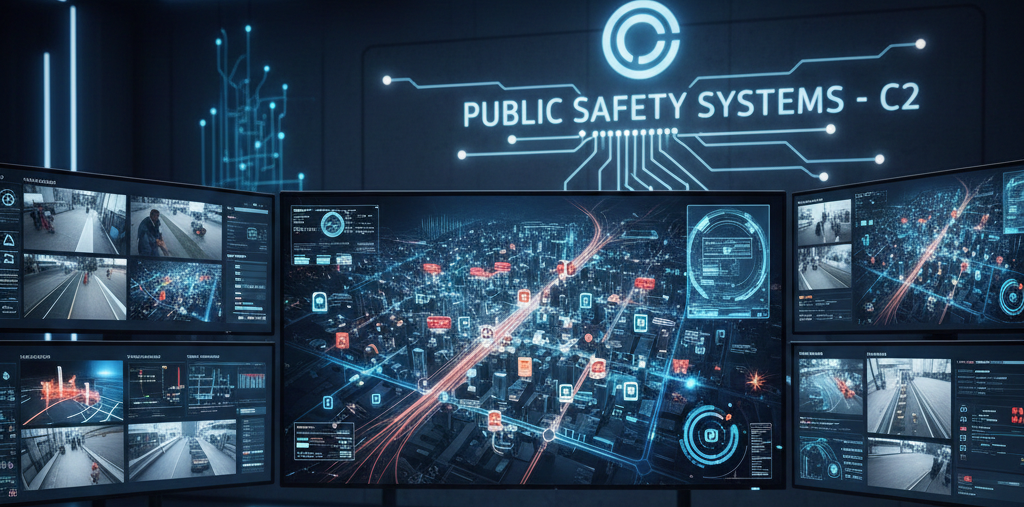
Command and Control (C2) & Public Safety Systems: Core Functions and Enabling Technologies
Command and Control (C2) and Public Safety Systems form the operational backbone of modern cities, critical infrastructure, and major events. They enable authorities to monitor conditions in real time, coordinate multi-agency responses, and make informed decisions under pressure. From daily incident management to large-scale emergencies and mass gatherings, C2 and Public Safety Systems provide the technological and procedural foundation for effective, timely, and coordinated action.
Introduction to Command and Control (C2) and Public Safety Systems
Command and Control (C2) and Public Safety Systems are central to how organizations prevent, manage, and respond to incidents that threaten safety, security, and operational continuity. These systems underpin modern control rooms, emergency operations centers, and integrated security environments across sectors such as transport, critical infrastructure, smart cities, hospitality, and major public venues.
While the term “Command and Control” originates from military doctrine, its civilian application emphasizes coordination, shared situational awareness, and disciplined decision-making rather than command authority alone. In public safety contexts, C2 provides the structural backbone that enables multiple stakeholders to act cohesively under pressure.
What Are Command and Control (C2) Systems?
Command and Control (C2) systems define how information is gathered, assessed, and transformed into coordinated action in complex operational environments. They integrate people, processes, and technology to ensure that decisions are timely, informed, and aligned with strategic intent.
In public safety and security operations, C2 systems are commonly implemented through control rooms or operations centers that aggregate data from multiple sources and support coordination across organizational and functional boundaries.
Key Characteristics of Effective C2 Systems
Effective Command and Control systems are structured, resilient, and repeatable, allowing organizations to operate consistently even under stress. They establish clear roles and decision authority while remaining flexible enough to adapt to evolving situations. Rather than automating decisions, C2 systems support human judgment by providing context, prioritization, and visibility. Their effectiveness is measured not by technology alone, but by how well people and processes function together during real incidents.
Understanding Public Safety Systems
Public Safety Systems encompass the technologies, processes, and organizational arrangements used to protect people, assets, and the environment from harm. These systems address a wide range of incidents, from everyday safety issues to large-scale emergencies and disasters.
When integrated with Command and Control (C2) frameworks, public safety systems move beyond isolated response mechanisms and become part of a coordinated, multi-agency operating model.
Public Safety in Complex Operating Environments
Modern public safety operations increasingly take place in complex, mixed-use environments where multiple functions and stakeholders coexist. These environments may include public access areas, critical infrastructure, commercial operations, and temporary event activities. Without structured coordination, such complexity can lead to fragmented response and delayed decision-making. Command and Control (C2) and Public Safety Systems provide the discipline required to manage this complexity effectively.
Core Functions of Command and Control (C2) and Public Safety Systems
Situational Awareness
Situational awareness is the foundation of all Command and Control (C2) and Public Safety Systems. It involves the continuous collection, correlation, and interpretation of information from diverse sources to create an accurate understanding of the operational environment. This includes not only what is happening, but where, why, and what may happen next. Effective situational awareness enables early intervention and reduces reliance on reactive response.
Decision Support
Decision support capabilities help leaders and operators make informed choices under time pressure and uncertainty. By structuring information, highlighting priorities, and providing contextual insight, C2 systems reduce cognitive load during critical moments. This support improves consistency across shifts and teams, particularly in environments where multiple stakeholders are involved. Importantly, decision support enhances judgment without replacing human accountability.
Coordination and Resource Management
Coordination is a defining function of Command and Control (C2) and Public Safety Systems. These systems enable multiple teams, departments, and external agencies to operate in alignment toward shared objectives. Resource management within a C2 framework ensures that personnel, equipment, and capabilities are deployed where they are most needed. Predictable escalation and clear tasking prevent duplication of effort and operational friction.
Communication and Information Flow
Reliable communication ensures that all stakeholders operate from a shared and current operational picture. Command and Control systems structure how information is disseminated, validated, and updated across operational and leadership levels. Clear information flow reduces ambiguity, prevents misinformation, and supports coordinated action. In high-stakes situations, disciplined communication is often as critical as physical response.
Incident Lifecycle Management
Incidents are managed as lifecycles rather than isolated events within Command and Control (C2) and Public Safety Systems. This lifecycle perspective encompasses detection, assessment, response, stabilization, and post-incident review. Managing incidents holistically enables accountability, structured reporting, and organizational learning. Over time, this approach strengthens resilience and preparedness.
Enabling Technologies for Command and Control and Public Safety
Control Rooms and Operations Centers
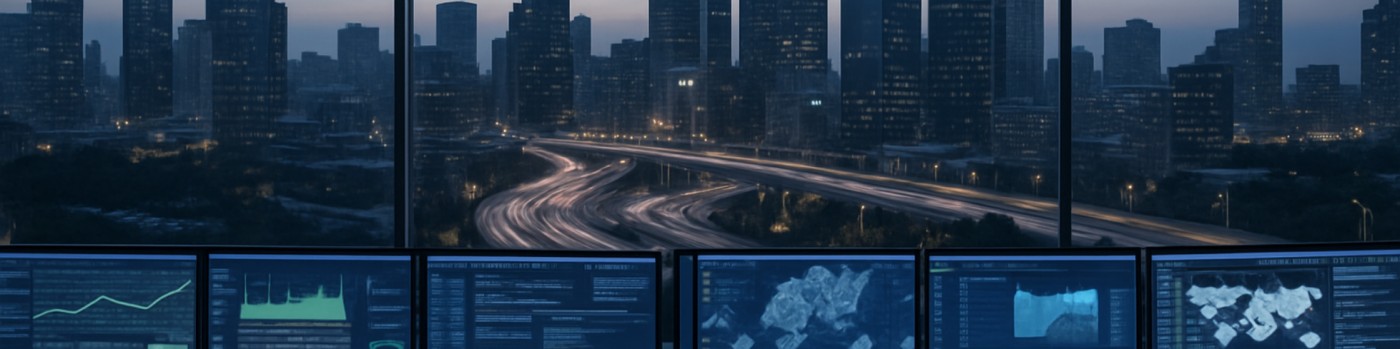
Control rooms serve as the focal point for Command and Control (C2) and Public Safety Systems. They bring together people, information, and technology to support coordinated operations and leadership decision-making. Depending on scale and complexity, control rooms may be centralized, distributed, or federated. Their effectiveness depends as much on operating concepts and training as on physical layout and technology.
Surveillance, Sensors, and IoT
Surveillance systems, environmental sensors, and IoT devices provide critical inputs to situational awareness. These technologies enable early detection of anomalies, hazards, and incidents across large or complex environments. Their true value emerges when data is integrated and contextualized rather than viewed in isolation. Without proper integration, sensor data risks becoming noise rather than insight.
PSIM and Incident Management Platforms
Physical Security Information Management (PSIM) and incident management platforms play a central role in modern C2 environments. They aggregate information from disparate systems, guide operators through structured workflows, and maintain a single operational picture. These platforms improve consistency, traceability, and coordination across incidents. When implemented correctly, they enhance both real-time response and post-incident analysis.
Geospatial and Visualization Technologies
Geospatial and visualization tools enhance spatial understanding of incidents, assets, and resources. Mapping, GIS, and advanced visualization allow decision-makers to assess proximity, movement, and impact more effectively. These tools are particularly valuable in large-scale or distributed environments where geography plays a critical role. Visual context often accelerates comprehension and decision-making.
Communications and Collaboration Systems
Communications and collaboration systems enable coordination across organizational and agency boundaries. These systems support voice, data, and situational messaging in both routine operations and emergencies. Interoperability and resilience are essential, particularly when public networks are congested or degraded. Effective communication underpins every other function of Command and Control (C2) and Public Safety Systems.
Integration, Governance, and Human Factors
Technology alone does not deliver effective Command and Control (C2) and Public Safety Systems. Governance structures, clearly defined roles, trained personnel, and disciplined processes are equally critical to success. Without these elements, even advanced systems can fail during real-world incidents.
Successful C2 implementations align technology with operating concepts, decision authority, and organizational culture. Human factors such as training, experience, and leadership behavior ultimately determine whether systems perform as intended under pressure.
Future Trends in Command and Control and Public Safety
Command and Control (C2) and Public Safety Systems continue to evolve in response to growing complexity, urbanization, and digital transformation. Trends include deeper system integration, enhanced analytics, and improved decision-support capabilities.
Despite these advances, the fundamental principles of C2 remain unchanged. Clear roles, reliable information, disciplined coordination, and accountable leadership will continue to define effective public safety operations.
Conclusion
Command and Control (C2) and Public Safety Systems are essential to managing risk, ensuring safety, and maintaining operational resilience across complex environments. By combining structured operating concepts with enabling technologies, organizations can respond effectively to both routine incidents and major emergencies.
When designed, governed, and operated correctly, these systems enhance situational awareness, support informed decision-making, and protect people, assets, and reputation. They are not merely technical solutions, but foundational elements of modern safety and security governance.
Examples of Underlying Technologies
Call Taking and Handling Systems (CTHS)
CTHS platforms manage emergency calls from initial intake through dispatch and closure. They support call prioritization, caller location, incident classification, and integration with dispatch and mapping systems, forming the first critical link in the emergency response chain.
Integrated Dispatch Consoles
Modern dispatch consoles unify call handling, radio communications, mapping, incident management, and resource tracking into a single operator interface. This reduces cognitive load, improves accuracy, and enables faster coordination across multiple services.
AI, IoT, Digital Twins, and Big Data Analytics
Advanced C2 environments increasingly leverage artificial intelligence, IoT sensors, digital twins, and big data platforms. These technologies support automated incident detection, anomaly identification, predictive modeling, and simulation of response scenarios, enhancing both preparedness and real-time operations.
GIS-Based Dispatch and Operations
Geographic Information Systems (GIS) are central to Command and Control (C2) and Public Safety Systems. GIS enables location-based dispatch, live unit tracking, spatial analysis, and visualization of risks, infrastructure, and incident impacts, providing critical spatial context for decision-making.
Let’s Talk
If you want to strengthen operational control, improve situational awareness, or prepare for complex operational
challenges, I welcome a confidential discussion.
Keep reading...
A Practical Security Operations Approach and PSIM Implementation
A leadership-driven security operations approach explaining how clarity, structure, and timing determine when PSIM truly adds operational value.
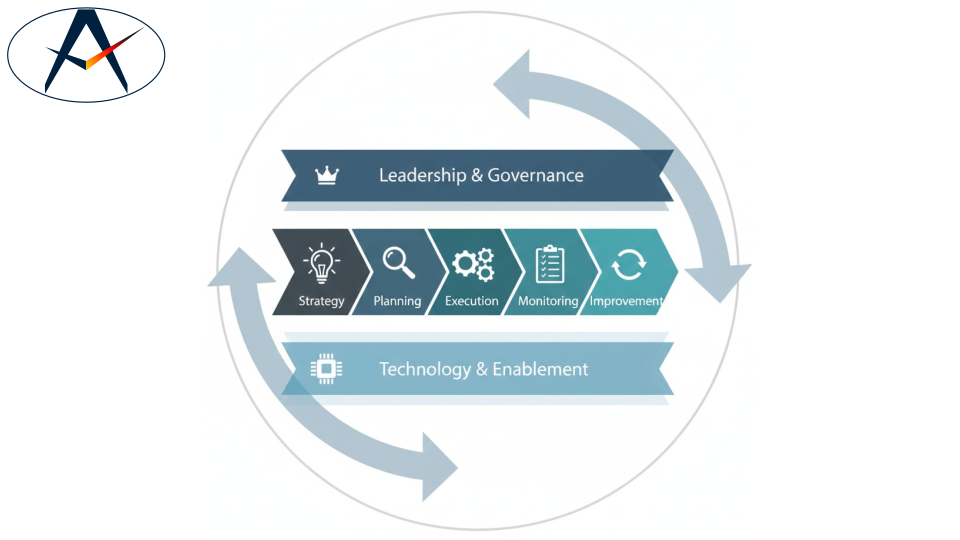
Concept of Operations for Hospitality Facilities: A Structured Framework for Safe, Seamless, and Resilient Operations
A structured Concept of Operations for hospitality security, integrating safety, guest services, and emergency response into daily hotel operations.
Control Room Maturity Roadmap: A Reading Guide for Security Operations Excellence
A practical control room maturity roadmap, guiding security operations teams from basic monitoring to integrated command & control excellence.
Control Room Projects | Operational Command & Public Safety Systems
Portfolio of control room projects highlighting command and control leadership, public safety systems, and complex operational environments.