
-
Integrated FM and Security Control Room Procedures
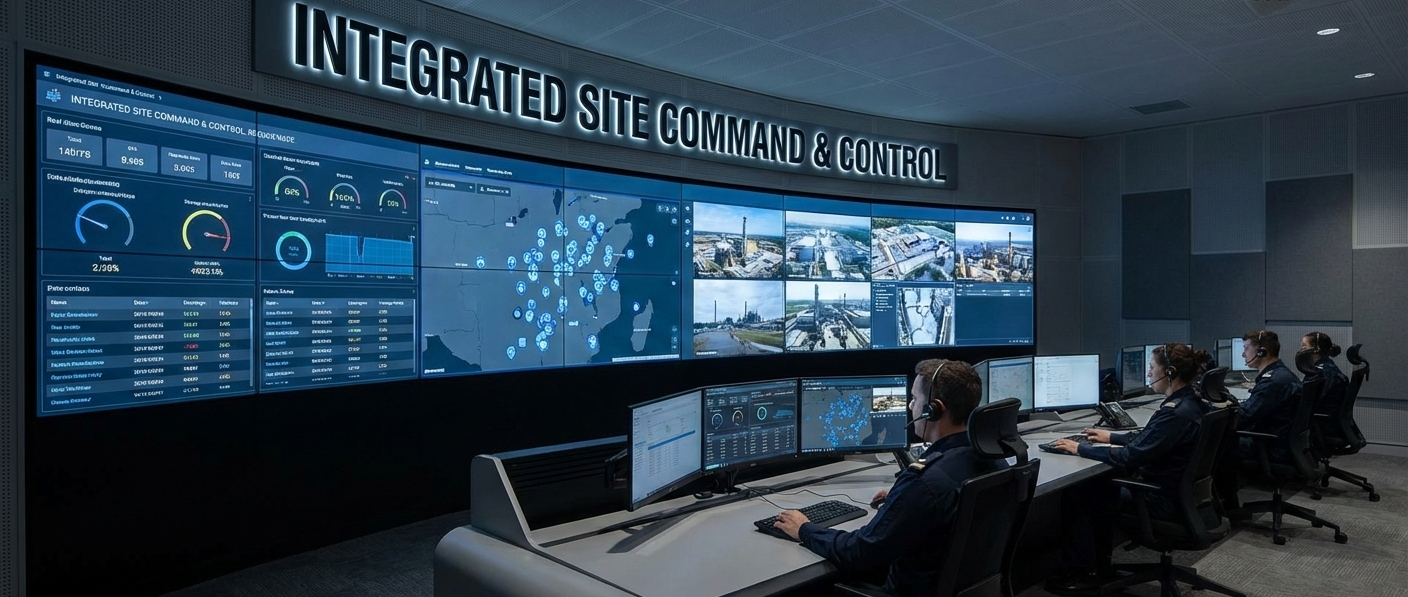
Integrated control rooms sit at the operational heart of modern facilities. Whether supporting hospitality, mixed-use developments, campuses, or critical infrastructure, their effectiveness depends less on technology and more on clear, enforceable integrated fm and security control room procedures. Without a structured ICCC operational framework, even the most advanced systems fail to deliver their full value.
This article introduces a professional governance model for control rooms. It explains how procedures govern daily operations and decision-making, while clarifying the vital distinction between routine tasks and emergency actions.
Need help with your procedures?
What Are Control Room Procedures?
Control room procedures define how people, systems, and information interact under both normal and abnormal conditions. They translate high-level control room governance and compliance requirements into repeatable actions that operators can execute consistently, regardless of shift or seniority.
In a modern environment, these procedures typically cover:
- Routine monitoring and coordination activities.
- Incident detection, verification, and classification.
- Escalation, communication, and reporting protocols.
- Interfaces with field teams, contractors, and external authorities.
Converged Security and FM Workflows
Unlike single-discipline operations, integrated control rooms manage converged security and FM workflows across multiple operational domains. This requires shared situational awareness and disciplined execution to ensure that a maintenance issue (like a leak) doesn't cascade into a security or safety breach.
Typical converged workflows include:
- Security Operations: Access control, CCTV monitoring, and patrol coordination.
- Facility Management: BMS alerts, HVAC, lifts, and fire systems.
- Safety Coordination: Emergency response and evacuation management.
- Stakeholder Communication: Real-time reporting to management and authorities.
The Procedural Hierarchy: SOPs vs. Response Procedures
A common weakness in control room design is treating all procedures as equal. To maintain control room governance and compliance, you must separate daily management from incidnet, emergency, and crisis management. This article establishes the framework, which is explored in detail in our dedicated guides:
- Standard Operating Procedures (SOPs): These define normal, repeatable activities such as system checks, shift handovers, and logging standards.
- Incident Response Procedures: These define time-sensitive actions taken during abnormal events, including escalation thresholds and stabilization steps.
Why Procedures Outperform Technology
Control rooms frequently invest in PSIM, BMS integration, and advanced analytics. However, technology only enables performance; integrated fm and security control room procedures deliver it. Well-designed protocols reduce operator dependency, improve consistency, and support rigorous audit trails necessary for international standards like ISO 41001.
Core Elements of Effective Protocols
Regardless of complexity, robust procedures within an ICCC operational framework share common characteristics:
- Clear scope and applicability.
- Defined roles and responsibilities (RACI).
- Step-by-step actions with clear decision criteria.
- Logging and record-keeping requirements for post-incident review.
 Integrated Control Center Standard Operating Procedures
A professional overview of Integrated Control Center Standard Operating Procedures, defining disciplined business-as-usual operations, governance, and readiness.
Integrated Control Center Standard Operating Procedures
A professional overview of Integrated Control Center Standard Operating Procedures, defining disciplined business-as-usual operations, governance, and readiness.
Response Procedures: Structured Escalation for Effective Incident Management
Response Procedures define how incidents are escalated, coordinated, and resolved. Learn how escalation levels work, how they are different from SOPs, and download your copy.
Conclusion
Integrated FM and Security Control Room Procedures are the backbone of resilient operations. By moving away from informal "tribal knowledge" and toward a documented ICCC operational framework, organizations create operational confidence and professional command-and-control. As facilities become more data-driven, the discipline of your procedures remains the decisive factor in your facility's safety and efficiency.
Disclaimer: This content is informational and does not constitute legal advice. Regulatory requirements and licensing conditions differ by jurisdiction and must be confirmed for each site.